AI-tuned cell culture at the ingredient scale
Our platform controls bioreactor conditions in real time, learning from each batch to push protein yield and purity toward food-grade specification.
Why mammary cells, not fermentation
Precision fermentation produces single recombinant proteins in isolation. Mammary cell culture produces the full complement of milk proteins in natural proportions, preserving the functional relationships that dairy formulators rely on. The micellar casein structure that gives mozzarella its stretch cannot be assembled from a single-protein source.
Our bovine mammary epithelial cell lines are selected and maintained for stable, continuous secretion of native casein and whey fractions. The proteins leave the cell in the same conformation they would in a cow's mammary gland, which means downstream purification preserves that functionality rather than trying to rebuild it.
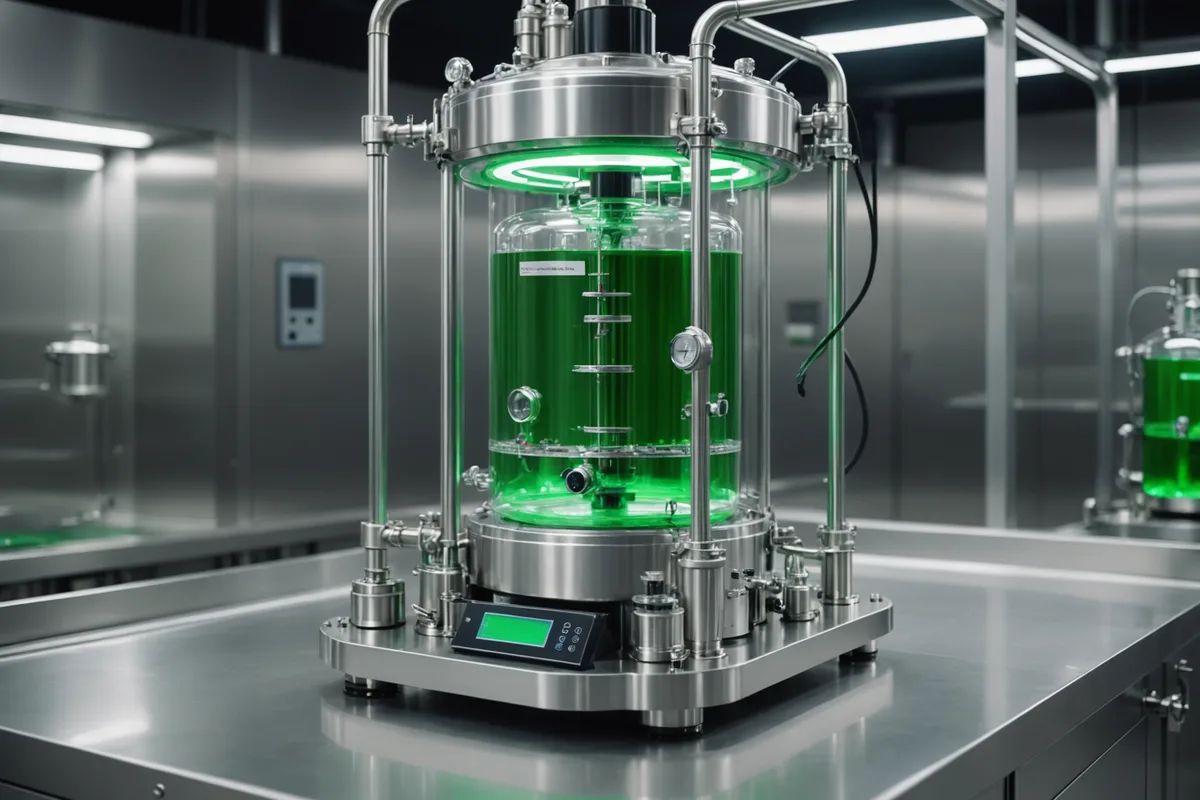
Continuous batch learning
Cell Expansion
Mammary epithelial cell lines are expanded in fed-batch bioreactors under tightly controlled nutrient and gas conditions.
AI Media Control
Our optimization model reads dissolved oxygen, pH, and metabolite levels continuously, adjusting media composition and feed schedules each run.
Protein Purification
Secreted proteins are harvested from conditioned media and purified through ultrafiltration and chromatography to food-grade purity, confirmed by HPLC.
Current pilot-scale specifications
All figures based on internal HPLC and mass spectrometry analysis of 200L pilot-run output. Figures reflect 2025 pilot program results.
beta-Casein purity: 94% (HPLC)
Measured by reverse-phase HPLC across sequential pilot batches. Purity reflects the proportion of target fraction relative to total protein content.
Molecular weight: 23.6 kDa
Confirmed by mass spectrometry. Matches native bovine beta-casein reference, indicating correct protein folding and post-translational processing.
Food-grade classification
Compliant with Codex Alimentarius protein concentrate standards. Allergen statement: contains milk proteins. Full documentation available to qualified partners.
Batch consistency: CV <3%
Coefficient of variation below 3% across 12 sequential runs. AI media control drives this consistency by eliminating manual parameter guesswork between batches.
What is coming next
Our pilot platform produces beta-Casein today. Additional fractions are in development on the same cell-culture backbone.
beta-Casein (BC-1)
Available for pilot quantities today. Native micellar structure, food-grade lyophilized powder. Full technical documentation included with every sample.
alpha-Lac + beta-Lac
alpha-Lactalbumin and beta-Lactoglobulin at pilot scale, targeting Q3 2026. Co-expressed on the same platform for native whey fraction ratios.
Kappa-Casein and MFGM
Kappa-Casein for complex micelle applications and milk fat globule membrane proteins are in the research phase. Timeline available on request to qualified partners.
Frequently asked questions
We currently offer beta-Casein BC-1 as a lyophilized powder in pilot quantities. The protein is produced by bovine mammary epithelial cell culture, purified to food-grade specification, and supplied with a full technical data package including HPLC purity report, molecular weight confirmation by mass spectrometry, and allergen declaration. Minimum supply quantities and current pricing are available after partner registration.
Our proteins are classified as milk proteins under existing dairy allergen labelling frameworks, which apply to both conventional and cell-culture-derived sources. We are currently in pre-submission engagement with regulatory bodies in our target markets regarding novel food pathways for cell-culture dairy ingredients. We do not hold GRAS self-affirmation or a Novel Food authorization at this stage, and we do not represent that we do. We advise prospective customers to conduct their own regulatory assessment for their specific formulations and markets in parallel with our pre-submission process. Our regulatory affairs team is available to brief qualified partners on the current status.
Formulation samples are available in 10g, 50g, and 250g packs. These are intended for analytical and small-scale formulation work. Pilot-volume orders in the kilogram range are available to qualified food manufacturers and formulation labs who have completed partner registration and a brief technical alignment meeting with our team. We do not currently supply at commercial volumes, and we will communicate a scale-up timeline to qualified partners as production capacity expands.
Our beta-Casein is produced in its native conformation, with confirmed molecular weight of 23.6 kDa matching the bovine reference standard. Internally, we have observed comparable emulsification and gelation behavior to conventional micellar casein in controlled formulation trials. We supply the full analytical data package with each sample so your formulation team can make an independent comparison within your specific application. Functionality claims in your finished product are your responsibility; our data provides the starting point for that assessment.
Yes. We routinely work under mutual NDA with food manufacturers and ingredient distributors who require confidentiality during the evaluation and early formulation phase. Our standard mutual NDA template is available through the partner portal after registration. For partners requiring custom NDA terms, our legal team will review reasonable modifications. All pilot supply agreements and technical data packages are shared under NDA by default.
Ready to evaluate the specification?
Pilot quantities of beta-Casein BC-1 are available to qualified food manufacturers and formulation labs. Every sample pack includes HPLC purity data, molecular weight confirmation, and full handling documentation.